01
The photo that makes a pet dance well
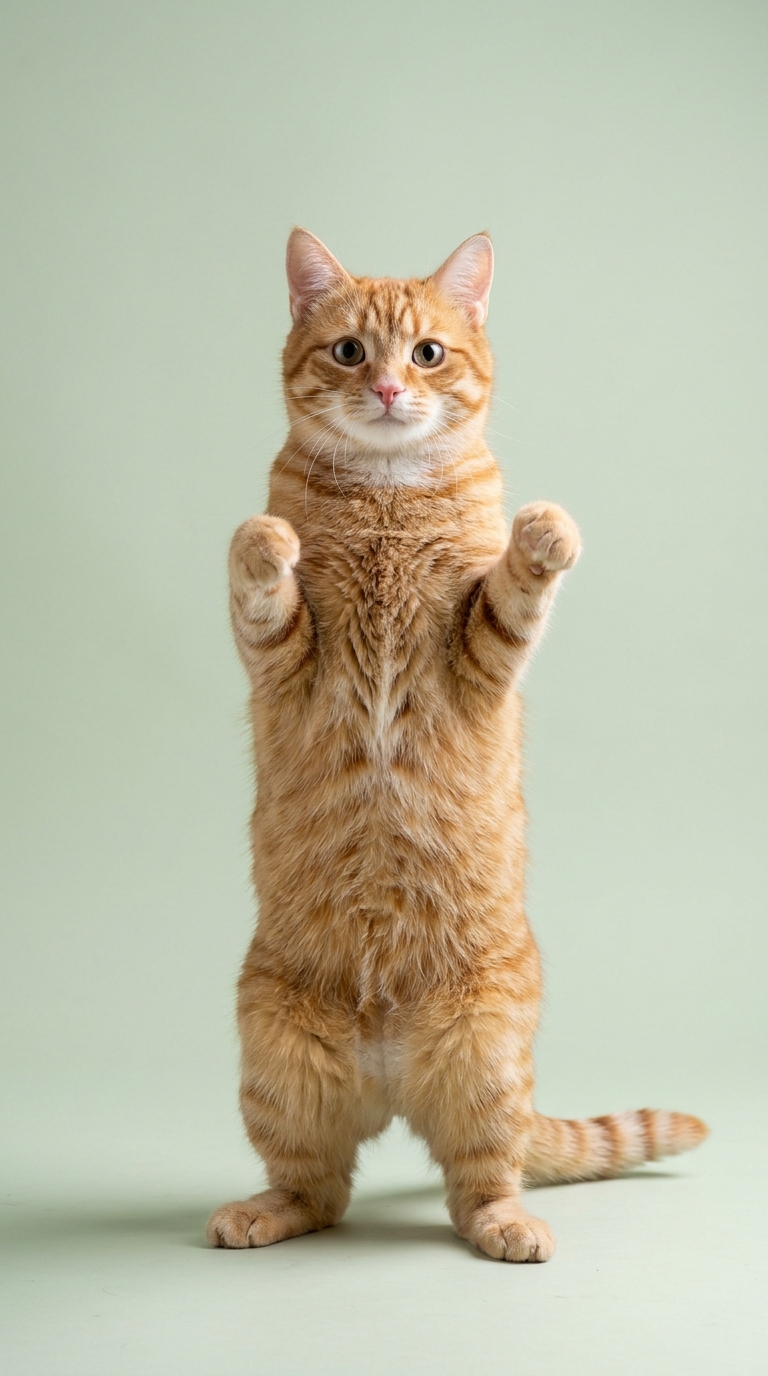
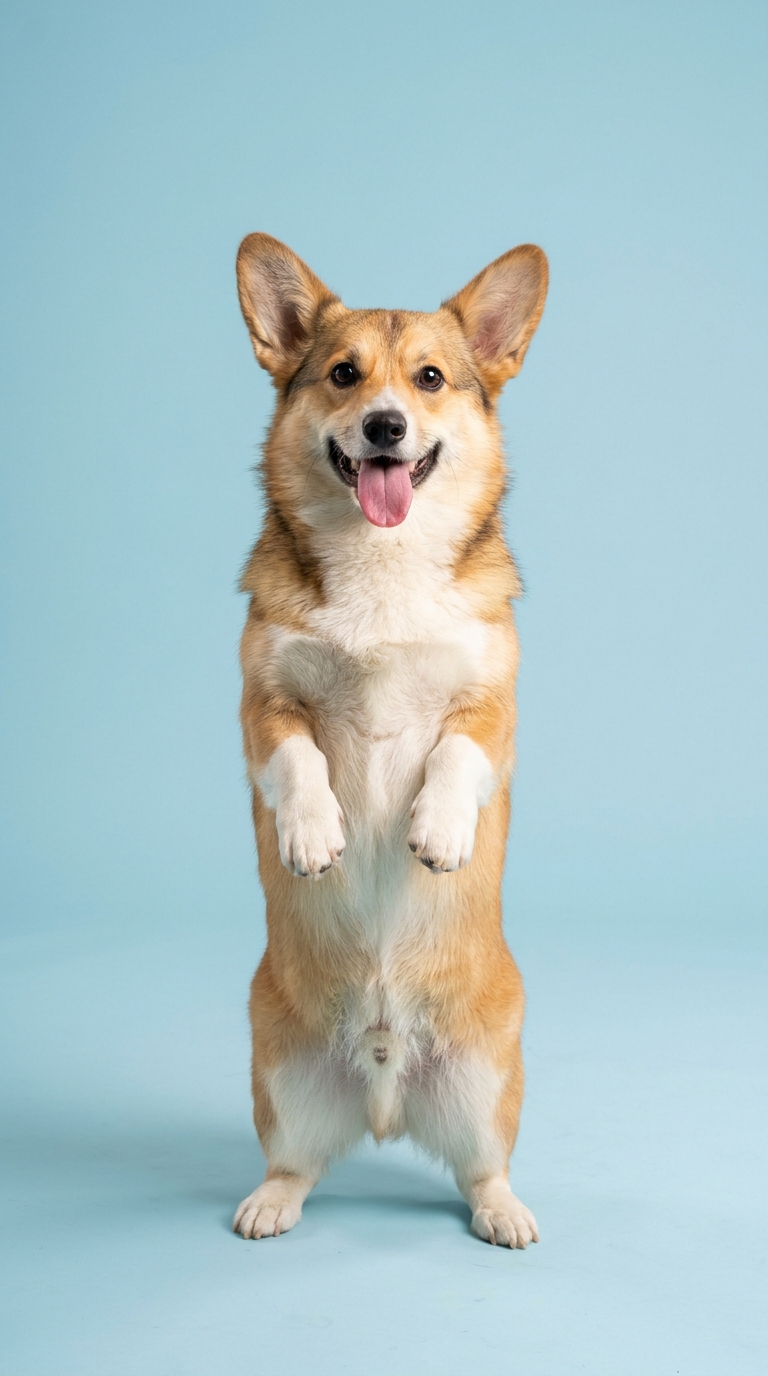
The dance needs to see the body it is moving. A cat or dog standing on its hind legs, begging for a treat or stretching up a door, gives the clearest result, because the front legs can act as arms and the back legs can step. A pet sitting upright, facing the camera, is the next best choice. A pet lying down, curled up or photographed from above gives the move very little to work with, and the result tends to wobble rather than dance. Use good light, a plain floor or wall behind the pet, and keep the whole animal in the frame from ears to paws, including the tail if you can. Fluffy coats are fine; very dark pets in dim light lose detail.
02
What a pet dance looks like
Your pet stays an animal. It keeps four legs, fur, ears and tail, and the move is played out within what that body can do: a cat bobs and lifts its front paws, a dog shifts its weight from side to side, a rabbit hops in place. It will not grow human hands or stand like a person, and we do not try to make it. Gentle moves read best. Bounce, Wave arms and Two-step look charming on most animals; Robot can look funny on a dog; Spin is the hardest, since fast turns can blur legs and tails. Expect results to vary between photos of the same pet, which is why the Draft comes first.
03
Dogs, cats and other pets
Dogs with a clear standing pose, such as a dog up on its hind legs, give the most dance-like results, and short-legged breeds still bounce well. Cats are best photographed sitting tall or reaching up; a cat lying in a sunbeam is lovely but hard to animate. Rabbits, guinea pigs and hamsters suit Bounce, since their bodies are compact. Birds, especially parrots on a perch, can sway and flap with Wave arms. Fish, snakes and other animals without legs do move, but with their whole body rather than steps. Whatever the animal, one pet per picture works far better than two pets side by side.